Cascade Point: A Responsibility to Our Past and Our Future
By McHugh Pierre, President and CEO, Goldbelt, Inc.
There are legitimate questions about Cascade Point: protecting culturally important places, spending public money, and who benefits from the project. Goldbelt supports this project because we believe it can improve transportation in Southeast Alaska, strengthen Juneau's economy, and create opportunity for future generations.
Goldbelt selected lands as part of the Alaska Native Claims Settlement Act. Who did the selection? Alaska Native people. These same Alaska Native people continue to own Goldbelt and elect its Board of Directors today. Goldbelt will never desecrate culturally important sites on its land. We welcome additional cultural and historical knowledge about areas we plan to develop.
The ferry terminal at Cascade Point is a State of Alaska development on Goldbelt ANCSA land. Goldbelt and the Alaska Department of Transportation signed a memorandum of understanding in 2023 to explore the terminal. Goldbelt first hired archaeologists to survey the land in 1991, with additional investigations in the years since.
In 1991, archaeologist Michael Yarborough documented culturally modified trees, two shallow depressions and a small shell midden. These findings indicated traditional hemlock bark harvesting and processing rather than a permanent village. A 1996 survey documented 86 culturally modified trees along the proposed road alignment and others on the development site. Neither survey identified a village or graveyard on Goldbelt land at Cascade Point.
In 2005, United States Forest Service archaeologists monitored road construction and clearing of approximately 25 acres of Goldbelt land. No new cultural materials, village site or graveyard were reported. In 2024, archaeologists documented 71 culturally modified trees and relocated a small portion of a previously documented shell midden. They also monitored geotechnical trenching across the proposed construction area. No additional cultural materials were found in the trenches or drill locations.
Village locations elsewhere in Berners Bay have been documented. Historical interviews with Tlingit community members, including Wooshkeetaan clan leader George Jim Sr., Cecelia Kunz and Rosa Miller, recorded traditional land use and cultural sites. The Forest Service also held a Native consultation meeting in March 1997 with ten Native community members concerning the earlier Cascade Point access-road project. Archaeological investigations have not identified a village or graveyard at the proposed terminal location on Goldbelt land. We recognize the cultural significance of Berners Bay and the knowledge carried by our Elders.
Goldbelt supports a shuttle ferry system in Southeast Alaska like those in Puget Sound and British Columbia. Cascade Point would be the first step toward that broader network. Shorter, lower-cost routes are key to making it work. According to the Alaska Department of Transportation, Cascade Point would shorten the ferry route by approximately 24 nautical miles. A State-commissioned analysis projects more than three hours of daily ferry operating time saved under the modeled schedule and approximately 117,000 gallons in annual fuel savings. Those savings would help the Alaska Marine Highway System make better use of its vessels and resources. Goldbelt has committed to a paid shuttle connecting Cascade Point, Auke Bay and the Mendenhall Valley. We recognize the additional road travel for passengers, and access must be part of the solution.
Funds were appropriated for Juneau Access and transportation in the Lynn Canal corridor. The legislature later sought to redirect portions of that funding to other transportation projects, but Governor Dunleavy vetoed those transfers. We should invest in transportation solutions for Southeast Alaska, not walk away from them.
A terminal at Cascade Point would create an opportunity for the Glacier Highway from Auke Bay to Cascade Point to receive National Highway System designation and additional federal maintenance funding. That funding would support winter road crews and equipment serving Juneau, improving road safety and snow response times. The project would also support jobs and bring construction dollars to our economy.
Goldbelt has provided an easement to the Alaska Department of Transportation for this project, with the expectation that responsible development of our lands will create economic opportunity for our shareholder owners. But Cascade Point must also make sense as a public transportation investment. We believe the transportation benefits make that investment worthwhile.
Goldbelt is committed to consistent transportation at the lowest possible cost to improve the economy of Juneau and northern Southeast. Lowering the cost of living and creating family-wage jobs will keep families in Juneau and provide hope for the future. Goldbelt will honor Tlingit culture while doing our part to expand the economy.
That is our responsibility as an Alaska Native Corporation: to protect what has been entrusted to us while creating opportunities for the generations who follow.
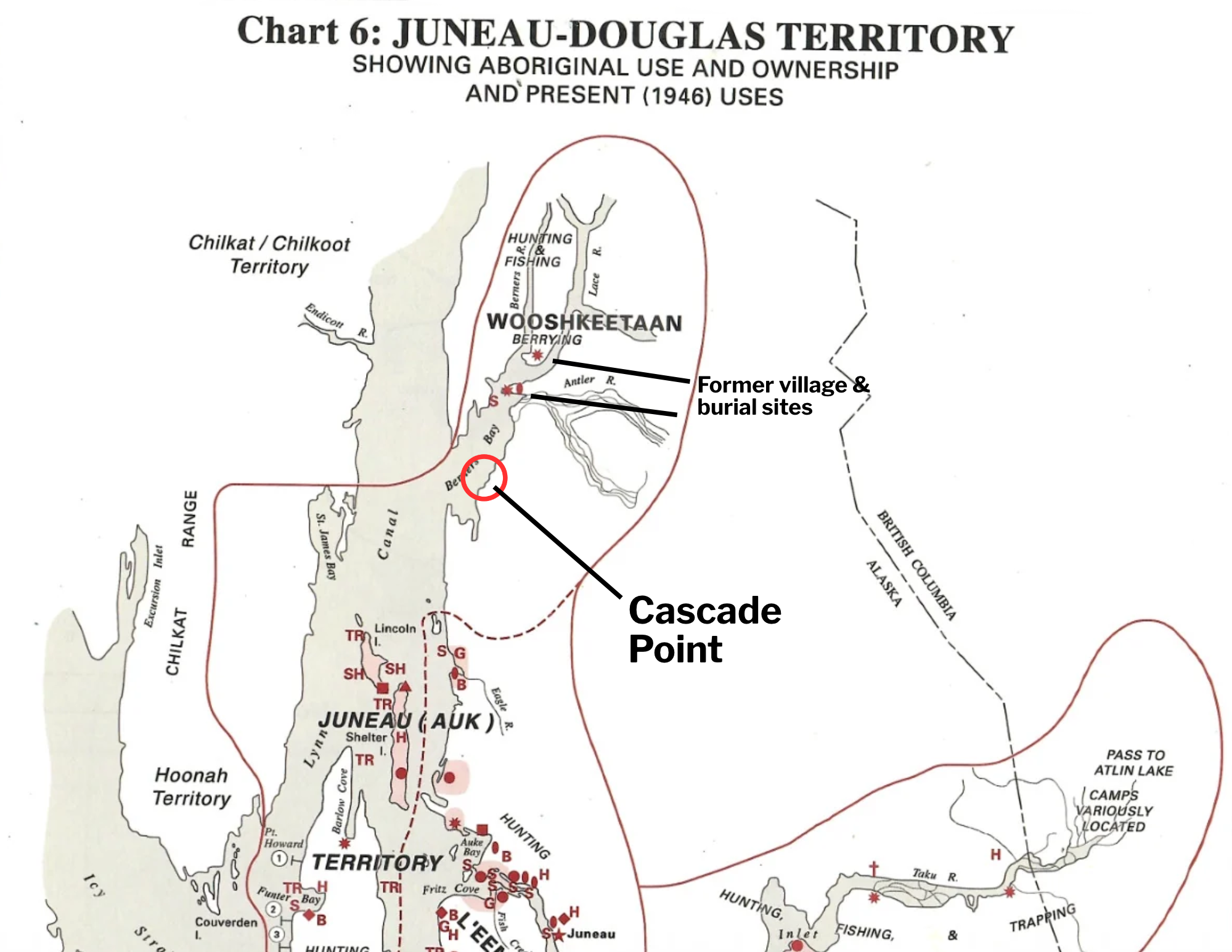
Historical map of Tlingit land use in the Berners Bay area. Source: Goldschmidt and Haas, Haa Aaní, Our Land: Tlingit and Haida Land Rights and Use (1998), p. 38.
Author bio
McHugh Pierre is President and CEO of Goldbelt, Inc., Juneau's Alaska Native corporation, rooted in the traditional homelands of the Áak'w Kwáan and T'áaku Kwáan and representing more than 4,500 shareholders.
Cascade Point Ferry Terminal: Frequently Asked Questions
What is Goldbelt's role in the Cascade Point project?
Goldbelt owns the land and is leasing it to the Department of Transportation for the construction of the proposed terminal. Goldbelt is not involved with the management of the project.
In 2023, Goldbelt and DOT&PF signed a memorandum of understanding to explore shared infrastructure at Cascade Point. DOT&PF is leading the public ferry terminal project, while Goldbelt is evaluating opportunities for responsible development of its lands, including employment, contracting, marine services and other commercial activities.
The specific land-use and partnership arrangements are still being developed.
What is the Cascade Point Ferry Terminal, and why is it being proposed?
Cascade Point is a proposed ferry terminal at Mile 42 on Glacier Highway, near Sunshine Cove.
The project would shorten ferry crossings between Juneau, Haines and Skagway, potentially reducing operating costs, improving reliability and supporting more efficient Alaska Marine Highway System service.
The existing Auke Bay Ferry Terminal would remain in operation for other routes.
Who is paying for the project? Is Goldbelt funding construction?
The ferry terminal is a State transportation project, not a Goldbelt-funded construction project.
DOT&PF reports that Stage 1 design and construction and Stage 2 design are using previously appropriated State funds for the Juneau Access project, designated for transportation improvements in the Lynn Canal corridor.
Goldbelt's involvement includes its land ownership and partnership with the State. More information can found on the DOT website: https://dot.alaska.gov/sereg/projects/cascade-point-ferry-terminal/
How are cultural and archaeological resources being protected?
Cascade Point is within the traditional homelands of the Áak'w Kwáan and T'áaku Kwáan. Goldbelt recognizes the importance of protecting cultural resources and respecting the land and its history.
During the November 13 livestream, McHugh discussed previous archaeological investigations at the proposed terminal location, including surveys and monitoring conducted over several decades. He explained that those investigations had not identified a village or burial site within the surveyed terminal area.
The State's published analysis also acknowledges archaeological evidence of historical human activity in the broader Cascade Point area. Historic preservation consultation and archaeological monitoring remain important components of the project review process.
Goldbelt remains committed to responsible land stewardship and to working with the appropriate agencies and cultural partners as the project advances.
City and Bureau of Juneau Inventory of Historic Sites and Structures
How could Cascade Point improve ferry service?
A shorter ferry route could reduce travel time and fuel consumption while supporting more reliable connections between Juneau, Haines and Skagway.
A State-commissioned analysis projects:
- Approximately 24 fewer nautical miles per crossing between Juneau and Haines.
- More than three hours less ferry operating time per round trip.
- Approximately 117,000 gallons of marine fuel saved annually.
- Approximately $590,000 in net annual operating benefits after estimated additional terminal expenses and revenue changes.
- Approximately 1,190 metric tons of net annual carbon dioxide reductions, accounting for additional vehicle travel.
These are estimates, not guaranteed outcomes. The State's analysis also recognizes that operating savings alone are not expected to recover the project's construction costs.
What opportunities could Cascade Point create for shareholder owners?
Goldbelt sees Cascade Point as an opportunity to responsibly develop its lands while supporting improved transportation infrastructure for Southeast Alaska.
Potential opportunities include shareholder employment, contracting, marine services and commercial development. These opportunities will depend on future business planning, project approvals and market conditions.
Goldbelt will continue sharing information and answering shareholder questions as the project advances.
Learn more and share feedback
For questions about Goldbelt's involvement, email info@goldbelt.com.
For State project details, visit:
Latest News
Showing top 5 news items from the last 90 daysCascade Point: A Responsibility to Our Past and Our Future
11/18/2026
Fall CEO Livestream: Cascade Point, Tram and Goldbelt's Future
11/13/2026Goldbelt President and CEO McHugh Pierre addressed shareholder questions and shared updates on major development projects, business performance and shareholder opportunities during the November 13 Fall CEO Livestream.
Goldbelt Board of Directors Adopts Code of Conduct
11/10/2026Newly approved Code of Conduct reinforces Goldbelt's commitment to integrity, accountability, and service to shareholder owners.

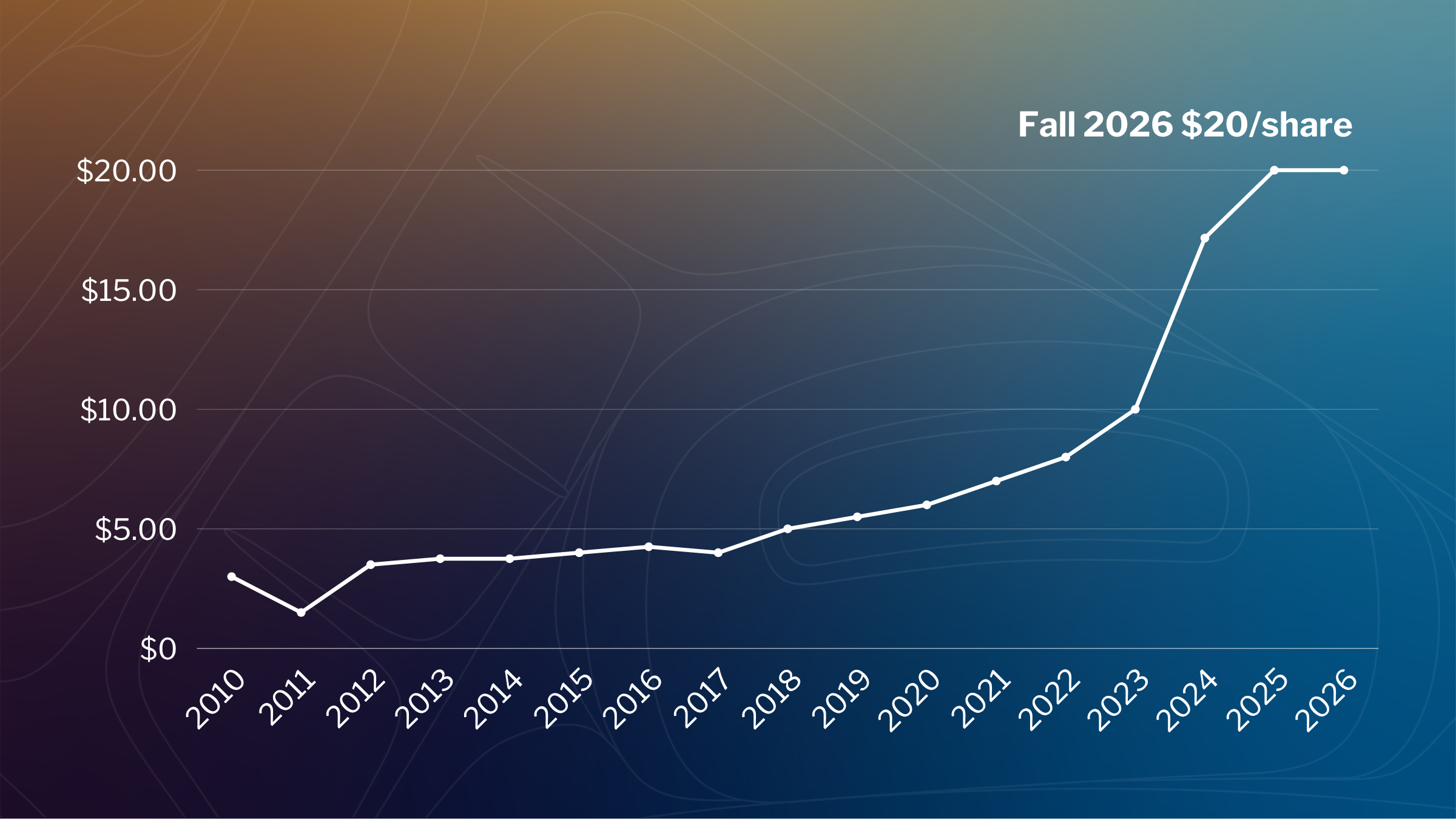
Goldbelt’s 2026 Fall Distribution Draft: $20 Per Share
11/6/2026As part of Goldbelt’s continued commitment to our shareholders, we are pleased to announcement fall distribution information.
Goldbelt Achieves CMMC Level 2, Major Investment in Security and Customer Trust
10/9/2026Goldbelt and all its subsidiaries have achieved Cybersecurity Maturity Model Certification (CMMC) Level 2. This is a major milestone in the company’s continued investment in cybersecurity and responsible information protection that positions Goldbelt well as cybersecurity expectations continue to evolve across the federal marketplace.